
Endometriosis often takes years to diagnose. This ultrasound simulation innovation could help change that
Updated
March 17, 2026 1:01 AM

A group of women facing backwards. PHOTO: UNSPLASH
Endometriosis affects roughly one in ten women worldwide, yet diagnosing the condition often takes years. In many cases, patients experience symptoms for nearly a decade before receiving a confirmed diagnosis. One reason is that detecting endometriosis through ultrasound requires specialized training and clinicians do not always encounter enough real cases to build that expertise.
To address this gap, medical simulation company Surgical Science has introduced a new ultrasound training module designed specifically for identifying endometriosis. The system allows clinicians to practice scanning techniques in a virtual environment, helping them recognize signs of the disease without relying solely on real-patient cases.
A key feature of the simulator is training on the “sliding sign,” an ultrasound indicator used to detect deep endometriosis. Because the condition can appear differently from patient to patient, mastering this assessment in real clinical settings can be difficult. The simulator allows clinicians to repeat the process across multiple scenarios, improving their ability to identify the condition during routine examinations.
The module also incorporates the International Deep Endometriosis Analysis (IDEA) protocol, which provides a structured method for performing a complete pelvic ultrasound assessment. Additional training cases, region-based scenarios and certification options are included to support standardized learning.
Early training results suggest strong improvements in clinician confidence, including higher skill levels in transvaginal ultrasound and better recognition of deep endometriosis. By expanding access to structured ultrasound training, simulation tools like this could help reduce diagnostic delays and improve care for millions of women living with the condition.
Keep Reading
The collaboration between Oversonic Robotics and STMicroelectronics highlights how robotics is beginning to fill gaps traditional automation cannot.
Updated
January 23, 2026 10:41 AM
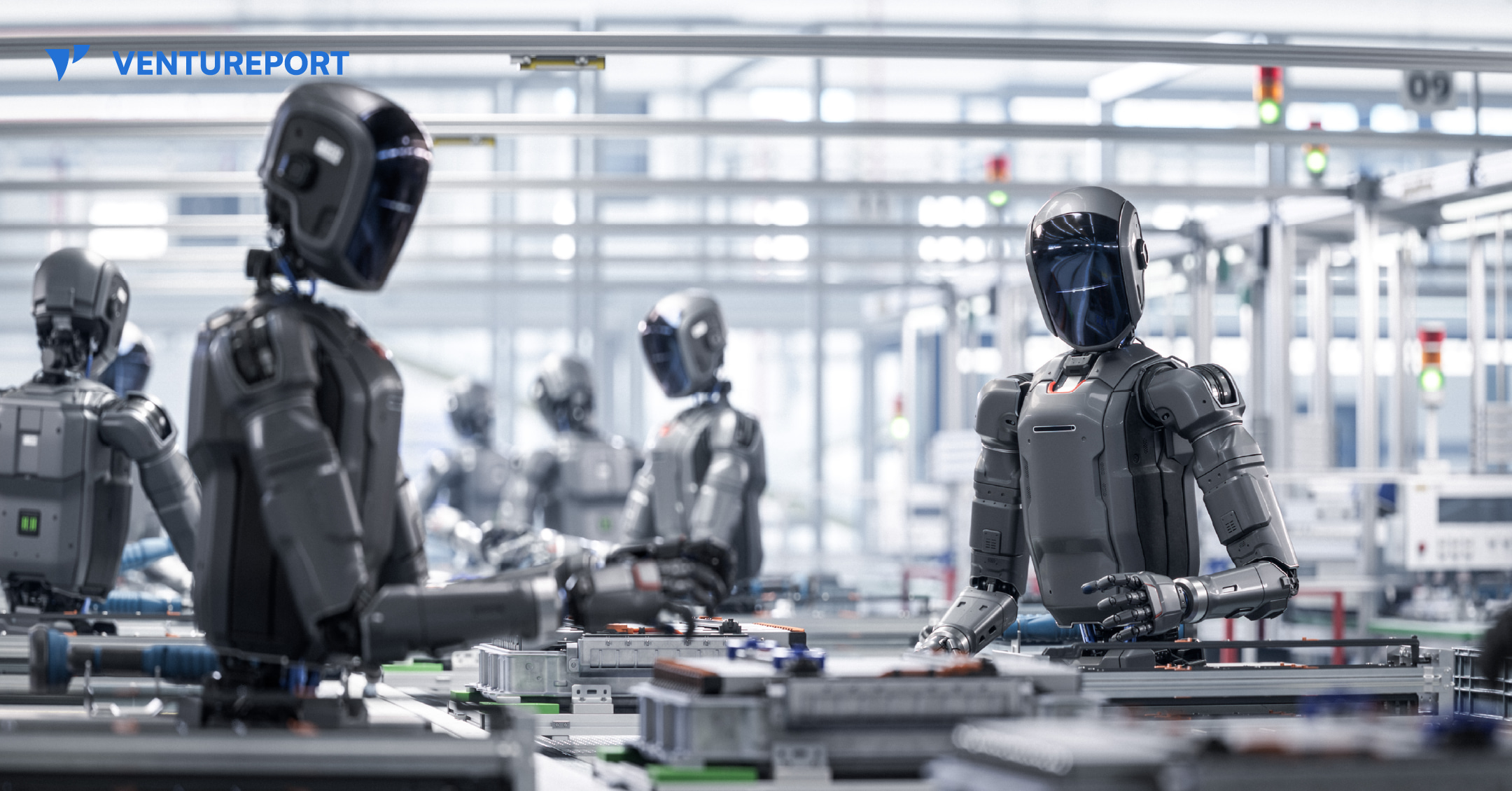
3D render of humanoid robots working in a factory assembly line. PHOTO: ADOBE STOCK
Oversonic Robotics, an Italian company known for building cognitive humanoid robots, has signed an agreement with STMicroelectronics, one of the world’s largest semiconductor manufacturers, to deploy humanoid robots inside semiconductor plants.
According to the companies, this is the first time cognitive humanoid robots will be used operationally inside semiconductor manufacturing facilities. And the first deployment has already taken place at ST’s advanced packaging and test plant in Malta.
At the center of the collaboration is RoBee, Oversonic’s humanoid robot. RoBee is designed to carry out support tasks within industrial environments, particularly where flexibility and interaction with human workers are required. In ST’s factories, the robots will assist with complex manufacturing and logistics flows linked to new semiconductor products. They are intended to work alongside existing automation systems, not replace them.
RoBee is notable for its ability to operate in environments shared with people. It is currently the only humanoid robot certified for use in both industrial and healthcare settings and is already in operation within several Italian companies. The robot is also being used in experimental hospital programs. That background helped position RoBee for deployment in tightly controlled manufacturing environments such as semiconductor plants.
Fabio Puglia, President of Oversonic Robotics, described the agreement as a milestone for deploying humanoid robots in complex industrial settings: “The partnership with STMicroelectronics is a great source of pride for us because it embodies the vision of cognitive robotics that Oversonic has brought to the industrial and healthcare markets. Being the first to introduce cognitive humanoid robots in a sophisticated production context such as semiconductors means measuring ourselves against the highest standards in terms of reliability, safety and operational continuity. This agreement represents a fundamental milestone for Oversonic and, more generally, for the industrial challenges these new machines are called to face in innovative and highly complex environments, alongside people and supporting their quality of work”.
From STMicroelectronics’ side, the use of humanoid robots is framed as part of a broader effort to manage growing manufacturing complexity. he company said RoBee will support complex tasks and help manage the intricate production flows required by newer semiconductor products. It is also expected to contribute to improved product quality and shorter manufacturing cycle times. The robots are designed to integrate with existing automation and software systems, helping improve safety and operational continuity.
In semiconductor manufacturing, precision and reliability leave little room for experimentation. Therefore, introducing humanoid robots into this environment signals a practical shift. It shows how robotics is starting to fill gaps that traditional automation has struggled to address.