
Endometriosis often takes years to diagnose. This ultrasound simulation innovation could help change that
Updated
March 17, 2026 1:01 AM

A group of women facing backwards. PHOTO: UNSPLASH
Endometriosis affects roughly one in ten women worldwide, yet diagnosing the condition often takes years. In many cases, patients experience symptoms for nearly a decade before receiving a confirmed diagnosis. One reason is that detecting endometriosis through ultrasound requires specialized training and clinicians do not always encounter enough real cases to build that expertise.
To address this gap, medical simulation company Surgical Science has introduced a new ultrasound training module designed specifically for identifying endometriosis. The system allows clinicians to practice scanning techniques in a virtual environment, helping them recognize signs of the disease without relying solely on real-patient cases.
A key feature of the simulator is training on the “sliding sign,” an ultrasound indicator used to detect deep endometriosis. Because the condition can appear differently from patient to patient, mastering this assessment in real clinical settings can be difficult. The simulator allows clinicians to repeat the process across multiple scenarios, improving their ability to identify the condition during routine examinations.
The module also incorporates the International Deep Endometriosis Analysis (IDEA) protocol, which provides a structured method for performing a complete pelvic ultrasound assessment. Additional training cases, region-based scenarios and certification options are included to support standardized learning.
Early training results suggest strong improvements in clinician confidence, including higher skill levels in transvaginal ultrasound and better recognition of deep endometriosis. By expanding access to structured ultrasound training, simulation tools like this could help reduce diagnostic delays and improve care for millions of women living with the condition.
Keep Reading
A humanoid robot being escorted away by police in Macau has gone viral online, prompting jokes about what some called the world’s first “robot arrest.”
Updated
March 17, 2026 12:53 AM
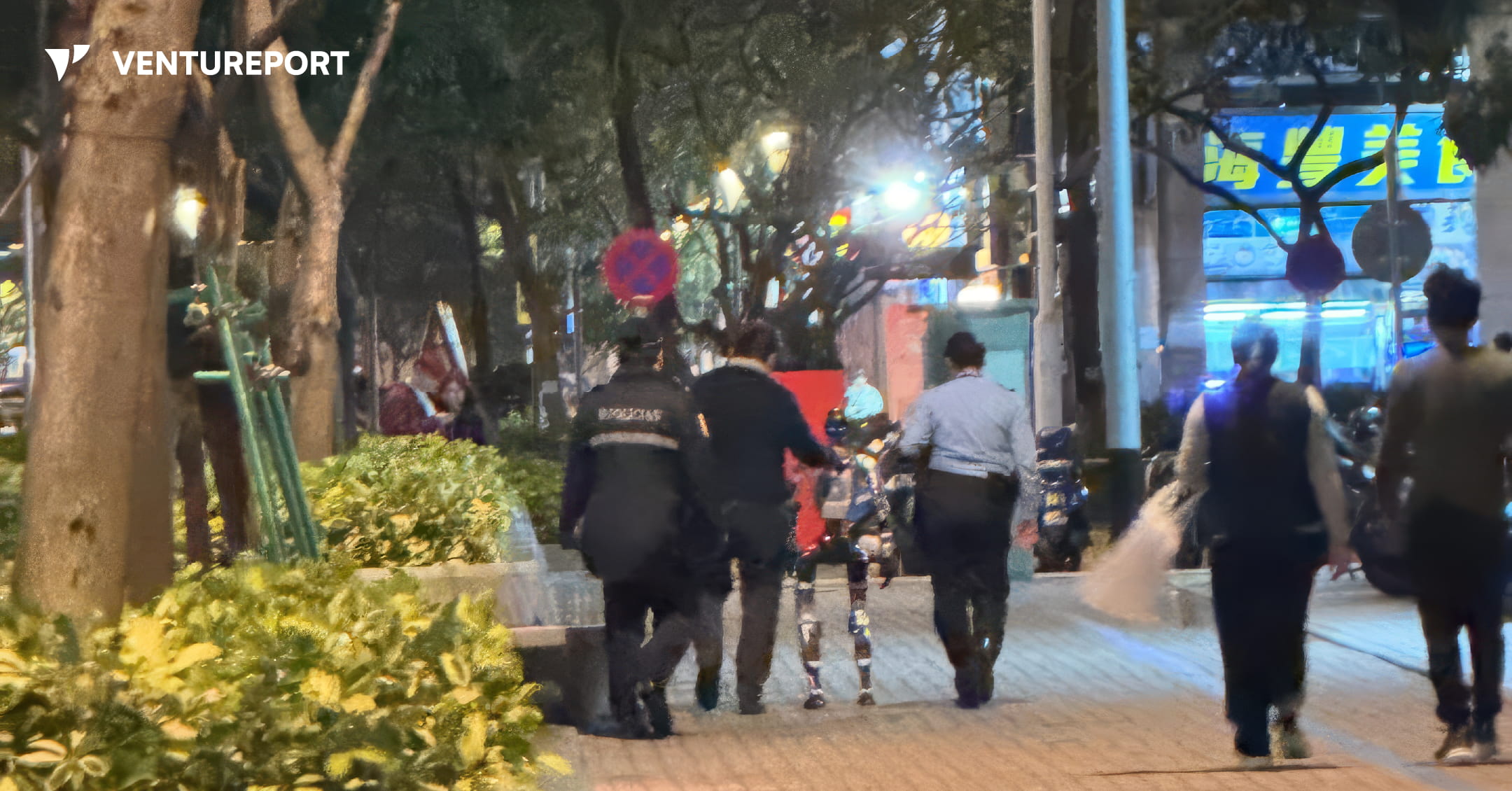
Macau police officer accompanying the humanoid robot. PHOTO: THREADS@BOXOF_CHOCOLATE
Police in Macau recently detained a humanoid robot after it frightened an elderly woman on a public street. The unusual encounter quickly spread online, prompting jokes about what some called the world’s first “robot arrest”.
On the evening of March 5, the robot was taken away by officers after the encounter triggered alarm among bystanders. Videos circulating on social media show an elderly woman confronting the robot on a sidewalk, visibly distressed and shouting that her “heart is pounding” while demanding to know why such “nonsense” was happening on the street. In the clip, the robot raises both hands toward the woman after she lashes out in fear — a gesture many viewers interpreted as a sign of apology.
Shortly afterwards, two officers from the Macau Public Security Police Force were seen escorting the robot and a man believed to be its operator away from the area. An officer is seen placing his right hand on the robot’s shoulder — the same posture police often use when presenting arrested suspects in official photographs.
That scene quickly spread online, fuelling jokes about what some called the world’s first “robot arrest”.
Photos shared online show a humanoid robot with long limbs and exposed mechanical joints, built from a black metallic frame without an outer shell. In dim lighting, several commenters said it resembled a “moving skeleton” — a striking sight for pedestrians encountering it unexpectedly on the street.
Witnesses said the woman appeared severely shaken and an ambulance was eventually called to take her to the hospital.
The incident also sparked discussion online about robots operating in public spaces. Some commenters argued that experimental technologies should be tested in controlled environments, while others said machines moving through public areas should have clearer designs or safety measures to avoid alarming pedestrians.
It remains unclear who deployed the robot or what purpose it was serving in the area at the time of the incident. Authorities have not released further details about the device or whether any action was taken following the encounter.