
CES 2026 and the move toward wearable robots you don’t wear all day.
Updated
January 28, 2026 5:53 PM

The π6 exoskeleton from VIGX. PHOTO: VIGX
CES 2026 highlighted how robotics is taking many different forms. VIGX, a wearable robotics company, used the event to introduce the π6, a portable exoskeleton robot designed to be carried and worn only when needed. Unveiled in Las Vegas, the device reflects a broader shift at CES toward robotics that move with people rather than staying fixed in industrial or clinical settings.
Exoskeletons have existed for years, most commonly in controlled environments such as factories, rehabilitation facilities and specialised research settings. In these contexts, they have tended to be large, fixed systems intended for long sessions of supervised use rather than something a person could deploy on their own.
Against that backdrop, the π6 explores a more personal and flexible approach to assistance. Instead of treating an exoskeleton as permanent equipment, it is designed to be something users carry with them and wear only when a task or situation calls for extra support.
The π6 weighs 1.9 kilograms and folds down to a size that fits into a bag. When worn, it sits around the waist and legs, providing mechanical assistance during activities such as walking, climbing or extended movement. Rather than altering how people move, the system adds controlled rotational force at key joints to reduce physical strain over time.
According to the company, the device delivers up to 800 watts of peak power and 16 Nm of rotational force. In practical terms, this means the system is designed to help users sustain effort for longer periods, especially during physically demanding activities_ by easing the body's load rather than pushing it beyond normal limits.
The π6 is designed to support users weighing between 45 kilograms and 120 kilograms and is intended for intermittent use. This reinforces its role as a wearable companion — something taken out when needed and set aside when not — rather than a device meant to be worn continuously.
Another aspect of the system is how it responds to different environments. Using onboard sensors and processing, the exoskeleton can detect changes such as slopes or uneven ground and adjust the level of assistance accordingly. This reduces the need for manual adjustments and helps maintain a consistent walking experience across varied terrain, with software fine-tuning how assistance is applied rather than directing movement itself.
The hardware design follows a similar logic. The power belt contains a detachable battery, allowing users to remove or swap it without handling the entire system. This keeps the wearable components lighter and makes the exoskeleton easier to transport. The battery can also be used as a general power source for small electronic devices, adding a layer of practicality beyond the exoskeleton’s core function.
VIGX frames its work around accessibility rather than industrial automation. “To empower ordinary people,” said founder Bob Yu, explaining why the company chose to focus on exoskeleton robotics. “VIGX is dedicated to expanding the physical limits of humans, enabling deeper outdoor adventures, making running and cycling easier and more enjoyable and allowing people to sustain their outdoor pursuits regardless of age.”
Placed within the wider context of CES, the π6 sits alongside a growing number of portable robots and wearable systems that prioritise convenience, mobility and personal use. By reducing the physical and practical barriers to wearing an exoskeleton, VIGX is testing whether assistive robotics can move beyond niche environments and into everyday life. If that experiment succeeds, wearable robots may become less about dramatic augmentation and more about quiet support — present when needed and easy to put away when not.
Keep Reading
The collaboration between Oversonic Robotics and STMicroelectronics highlights how robotics is beginning to fill gaps traditional automation cannot.
Updated
January 23, 2026 10:41 AM
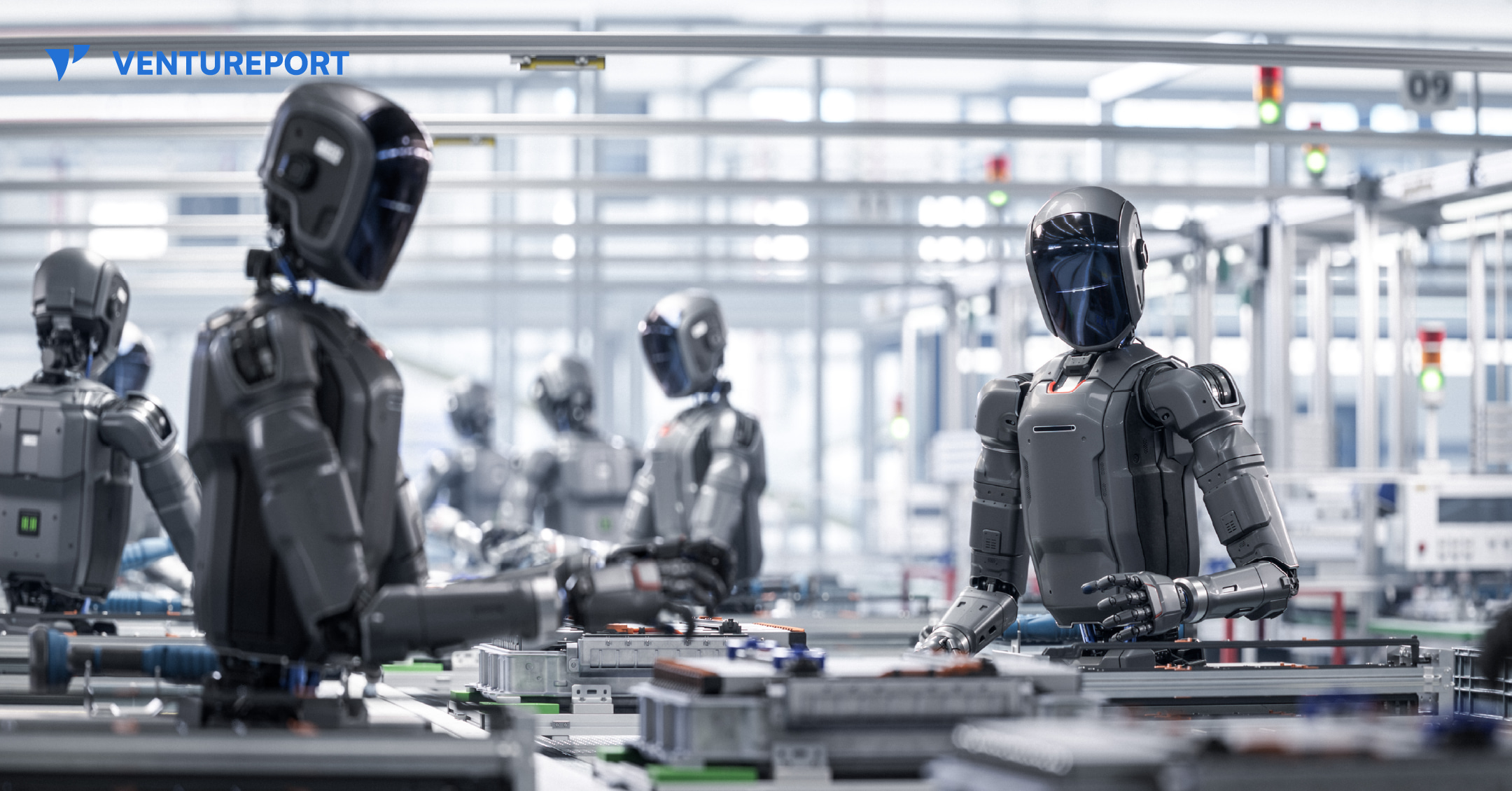
3D render of humanoid robots working in a factory assembly line. PHOTO: ADOBE STOCK
Oversonic Robotics, an Italian company known for building cognitive humanoid robots, has signed an agreement with STMicroelectronics, one of the world’s largest semiconductor manufacturers, to deploy humanoid robots inside semiconductor plants.
According to the companies, this is the first time cognitive humanoid robots will be used operationally inside semiconductor manufacturing facilities. And the first deployment has already taken place at ST’s advanced packaging and test plant in Malta.
At the center of the collaboration is RoBee, Oversonic’s humanoid robot. RoBee is designed to carry out support tasks within industrial environments, particularly where flexibility and interaction with human workers are required. In ST’s factories, the robots will assist with complex manufacturing and logistics flows linked to new semiconductor products. They are intended to work alongside existing automation systems, not replace them.
RoBee is notable for its ability to operate in environments shared with people. It is currently the only humanoid robot certified for use in both industrial and healthcare settings and is already in operation within several Italian companies. The robot is also being used in experimental hospital programs. That background helped position RoBee for deployment in tightly controlled manufacturing environments such as semiconductor plants.
Fabio Puglia, President of Oversonic Robotics, described the agreement as a milestone for deploying humanoid robots in complex industrial settings: “The partnership with STMicroelectronics is a great source of pride for us because it embodies the vision of cognitive robotics that Oversonic has brought to the industrial and healthcare markets. Being the first to introduce cognitive humanoid robots in a sophisticated production context such as semiconductors means measuring ourselves against the highest standards in terms of reliability, safety and operational continuity. This agreement represents a fundamental milestone for Oversonic and, more generally, for the industrial challenges these new machines are called to face in innovative and highly complex environments, alongside people and supporting their quality of work”.
From STMicroelectronics’ side, the use of humanoid robots is framed as part of a broader effort to manage growing manufacturing complexity. he company said RoBee will support complex tasks and help manage the intricate production flows required by newer semiconductor products. It is also expected to contribute to improved product quality and shorter manufacturing cycle times. The robots are designed to integrate with existing automation and software systems, helping improve safety and operational continuity.
In semiconductor manufacturing, precision and reliability leave little room for experimentation. Therefore, introducing humanoid robots into this environment signals a practical shift. It shows how robotics is starting to fill gaps that traditional automation has struggled to address.