
Inside the funding round driving the shift to intelligent construction fleets
Updated
February 7, 2026 2:12 PM

Aerial shot of an excavator. PHOTO: UNSPLASH
Bedrock Robotics has raised US$270 million in Series B funding as it works to integrate greater automation into the construction industry. The round, co-led by CapitalG and the Valor Atreides AI Fund, values the San Francisco-based company at US$1.75 billion, bringing its total funding to more than US$350 million.
The size of the investment reflects growing interest in technologies that can change how large infrastructure and industrial projects are built. Bedrock is not trying to reinvent construction from scratch. Instead, it is focused on upgrading the machines contractors already use—so they can work more efficiently, safely and consistently.
Founded in 2024 by former Waymo engineers, Bedrock develops systems that allow heavy equipment to operate with increasing levels of autonomy. Its software and hardware can be retrofitted onto machines such as excavators, bulldozers and loaders. Rather than relying on one-off robotic tools, the company is building a connected platform that lets fleets of machines understand their surroundings and coordinate with one another on job sites.
This is what Bedrock calls “system-level autonomy”. Its technology combines cameras, lidar and AI models to help machines perceive terrain, detect obstacles, track work progress and carry out tasks like digging and grading with precision. Human supervisors remain in control, monitoring operations and stepping in when needed. Over time, Bedrock aims to reduce the amount of direct intervention those machines require.
The funding comes as contractors face rising pressure to deliver projects faster and with fewer available workers. In the press release, Bedrock notes that the industry needs nearly 800,000 additional workers over the next two years and that project backlogs have grown to more than eight months. These constraints are pushing firms to explore new ways to keep sites productive without compromising safety or quality.
Bedrock states that autonomy can help address those challenges. Not by removing people from the equation—but by allowing crews to supervise more equipment at once and reduce idle time. If machines can operate longer, with better awareness of their environment, sites can run more smoothly and with fewer disruptions.
The company has already started deploying its system in large-scale excavation work, including manufacturing and infrastructure projects. Contractors are using Bedrock’s platform to test how autonomous equipment can support real-world operations at scale, particularly in earthmoving tasks that demand precision and consistency.
From a business standpoint, the Series B funding will allow Bedrock to expand both its technology and its customer deployments. The company has also strengthened its leadership team with senior hires from Meta and Waymo, deepening its focus on AI evaluation, safety and operational growth. Bedrock says it is targeting its first fully operator-less excavator deployments with customers in 2026—a milestone for autonomy in complex construction equipment.
In that context, this round is not just about capital. It is about giving Bedrock the runway to prove that autonomous systems can move from controlled pilots into everyday use on job sites. The company bets that the future of construction will be shaped less by individual machines—and more by coordinated, intelligent systems that work alongside human crews.
Keep Reading
Bindwell is testing a simple idea: use AI to design smarter, more targeted pesticides built for today’s farming challenges.
Updated
January 8, 2026 6:33 PM
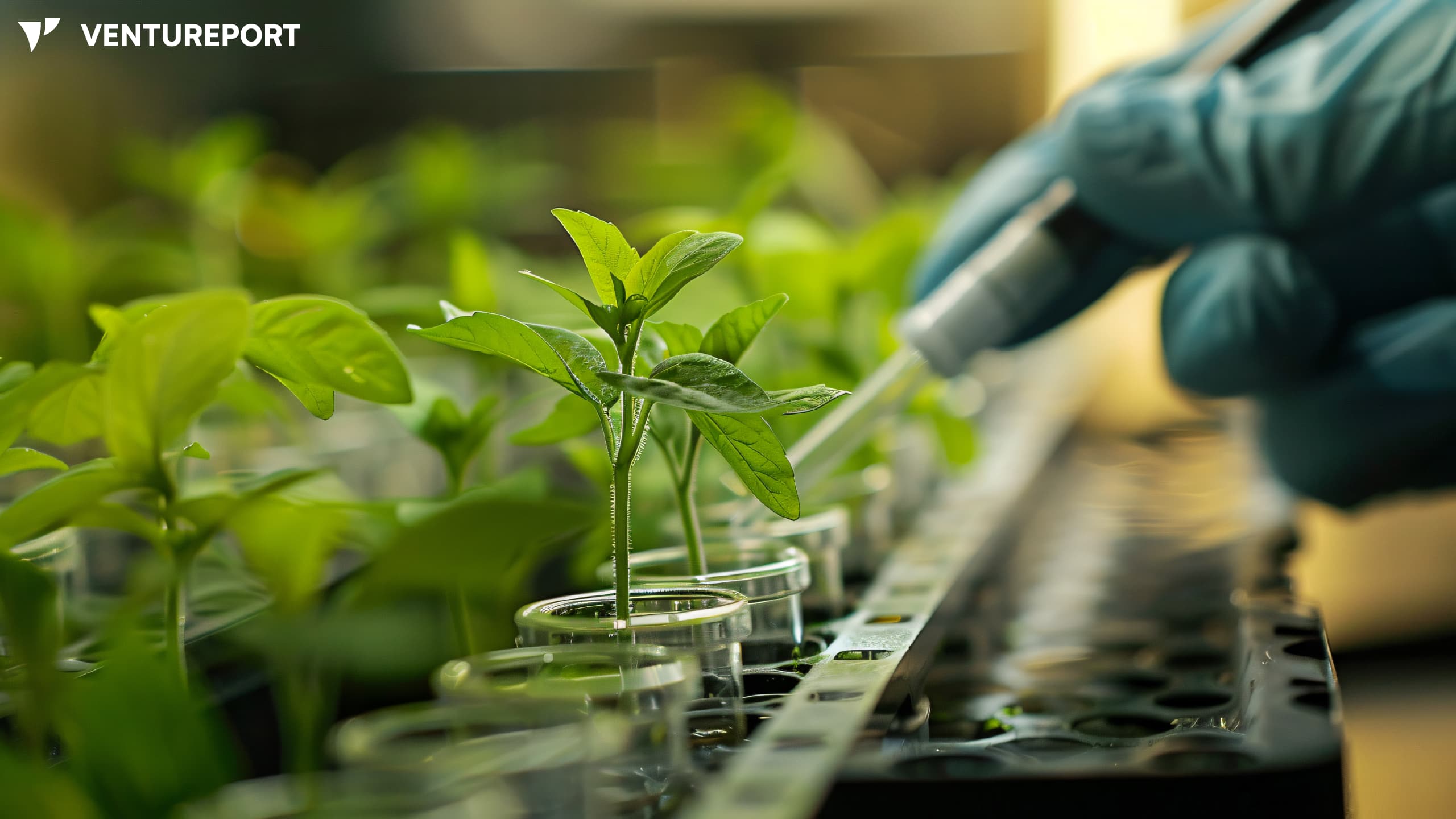
Researcher tending seedlings in a laboratory environment. PHOTO: FREEPIK
Bindwell, a San Francisco–based ag-tech startup using AI to design new pesticide molecules, has raised US$6 million in seed funding, co-led by General Catalyst and A Capital, with participation from SV Angel and Y Combinator founder Paul Graham. The round will help the company expand its lab in San Carlos, hire more technical talent and advance its first pesticide candidates toward validation.
Even as pesticide use has doubled over the last 30 years, farmers still lose up to 40% of global crops to pests and disease. The core issue is resistance: pests are adapting faster than the industry can update its tools. As a result, farmers often rely on larger amounts of the same outdated chemicals, even as they deliver diminishing returns.
Meanwhile, innovation in the agrochemical sector has slowed, leaving the industry struggling to keep up with rapidly evolving pests. This is the gap Bindwell is targeting. Instead of updating old chemicals, the company uses AI to find completely new compounds designed for today’s pests and farming conditions.
This vision is made even more striking by the people leading it. Bindwell was founded by 18-year-old Tyler Rose and 19-year-old Navvye Anand, who met at the Wolfram Summer Research Program in 2023. Both had deep ties to agriculture — Rose in China and Anand in India — witnessing up close how pest outbreaks and chemical dependence burdened farmers.
Filling the gap in today’s pesticide pipeline, Bindwell created an AI system that can design and evaluate new molecules long before they hit the lab. It starts with Foldwell, the company’s protein-structure model, which helps map the shapes of pest proteins so scientists know where a molecule should bind. Then comes PLAPT, which can scan through every known synthesized compound in just a few hours to see which ones might actually work. For biopesticides, they use APPT, a model tuned to spot protein-to-protein interactions and shown to outperform existing tools on industry benchmarks.
Bindwell isn’t selling AI tools. Instead, the company develops the molecules itself and licenses them to major agrochemical players. Owning the full discovery process lets the team bake in safety, selectivity and environmental considerations from day one. It also allows Bindwell to plug directly into the pipelines that produce commercial pesticides — just with a fundamentally different engine powering the science.
At present, the team is now testing its first AI-generated candidates in its San Carlos lab and is in early talks with established pesticide manufacturers about potential licensing deals. For Rose and Anand, the long-term vision is simple: create pest control that works without repeating the mistakes of the last half-century. As they put it, the goal is not to escalate chemical use but to design molecules that are more precise, less harmful and resilient against resistance from the start.