
Inside the funding round driving the shift to intelligent construction fleets
Updated
February 7, 2026 2:12 PM

Aerial shot of an excavator. PHOTO: UNSPLASH
Bedrock Robotics has raised US$270 million in Series B funding as it works to integrate greater automation into the construction industry. The round, co-led by CapitalG and the Valor Atreides AI Fund, values the San Francisco-based company at US$1.75 billion, bringing its total funding to more than US$350 million.
The size of the investment reflects growing interest in technologies that can change how large infrastructure and industrial projects are built. Bedrock is not trying to reinvent construction from scratch. Instead, it is focused on upgrading the machines contractors already use—so they can work more efficiently, safely and consistently.
Founded in 2024 by former Waymo engineers, Bedrock develops systems that allow heavy equipment to operate with increasing levels of autonomy. Its software and hardware can be retrofitted onto machines such as excavators, bulldozers and loaders. Rather than relying on one-off robotic tools, the company is building a connected platform that lets fleets of machines understand their surroundings and coordinate with one another on job sites.
This is what Bedrock calls “system-level autonomy”. Its technology combines cameras, lidar and AI models to help machines perceive terrain, detect obstacles, track work progress and carry out tasks like digging and grading with precision. Human supervisors remain in control, monitoring operations and stepping in when needed. Over time, Bedrock aims to reduce the amount of direct intervention those machines require.
The funding comes as contractors face rising pressure to deliver projects faster and with fewer available workers. In the press release, Bedrock notes that the industry needs nearly 800,000 additional workers over the next two years and that project backlogs have grown to more than eight months. These constraints are pushing firms to explore new ways to keep sites productive without compromising safety or quality.
Bedrock states that autonomy can help address those challenges. Not by removing people from the equation—but by allowing crews to supervise more equipment at once and reduce idle time. If machines can operate longer, with better awareness of their environment, sites can run more smoothly and with fewer disruptions.
The company has already started deploying its system in large-scale excavation work, including manufacturing and infrastructure projects. Contractors are using Bedrock’s platform to test how autonomous equipment can support real-world operations at scale, particularly in earthmoving tasks that demand precision and consistency.
From a business standpoint, the Series B funding will allow Bedrock to expand both its technology and its customer deployments. The company has also strengthened its leadership team with senior hires from Meta and Waymo, deepening its focus on AI evaluation, safety and operational growth. Bedrock says it is targeting its first fully operator-less excavator deployments with customers in 2026—a milestone for autonomy in complex construction equipment.
In that context, this round is not just about capital. It is about giving Bedrock the runway to prove that autonomous systems can move from controlled pilots into everyday use on job sites. The company bets that the future of construction will be shaped less by individual machines—and more by coordinated, intelligent systems that work alongside human crews.
Keep Reading
How Korea is trying to take control of its AI future.
Updated
January 13, 2026 10:56 AM
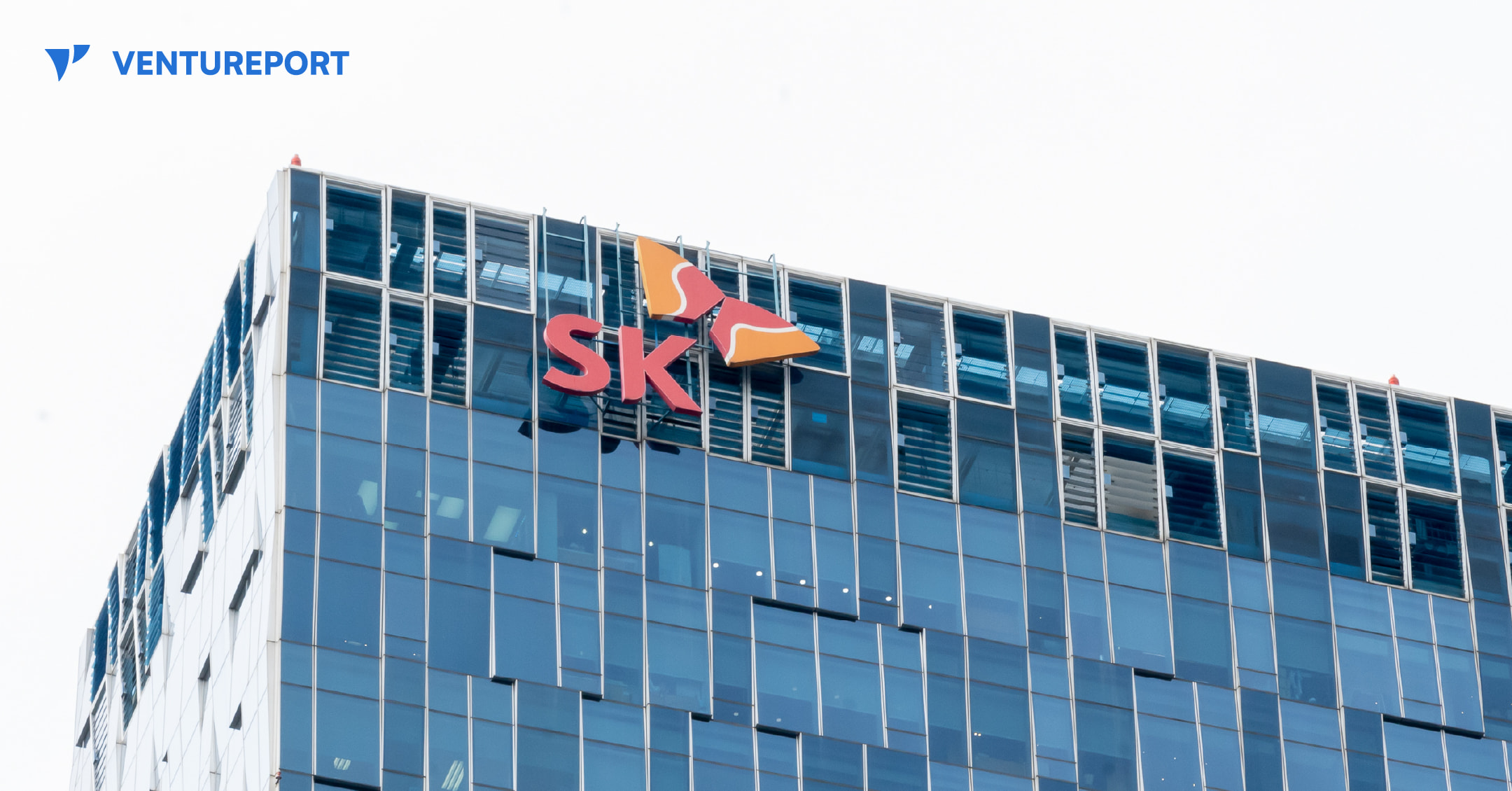
SK Telecom Headquarters in Seoul, South Korea. PHOTO: ADOBE STOCK
SK Telecom, South Korea’s largest mobile operator, has unveiled A.X K1, a hyperscale artificial intelligence model with 519 billion parameters. The model sits at the center of a government-backed effort to build advanced AI systems and domestic AI infrastructure within Korea. This comes at a time when companies in the United States and China largely dominate the development of the most powerful large language models.
Rather than framing A.X K1 as just another large language model, SK Telecom is positioning it as part of a broader push to build sovereign AI capacity from the ground up. The model is being developed as part of the Korean government’s Sovereign AI Foundation Model project, which aims to ensure that core AI systems are built, trained and operated within the country. In simple terms, the initiative focuses on reducing reliance on foreign AI platforms and cloud-based AI infrastructure, while giving Korea more control over how artificial intelligence is developed and deployed at scale.
One of the gaps this approach is trying to address is how AI knowledge flows across a national ecosystem. Today, the most powerful AI foundation models are often closed, expensive and concentrated within a small number of global technology companies. A.X K1 is designed to function as a “teacher model,” meaning it can transfer its capabilities to smaller, more specialized AI systems. This allows developers, enterprises and public institutions to build tailored AI tools without starting from scratch or depending entirely on overseas AI providers.
That distinction matters because most real-world applications of artificial intelligence do not require massive models operating independently. They require focused, reliable AI systems designed for specific use cases such as customer service, enterprise search, manufacturing automation or mobility. By anchoring those systems to a large, domestically developed foundation model, SK Telecom and its partners are aiming to create a more resilient and self-sustaining AI ecosystem.
The effort also reflects a shift in how AI is being positioned for everyday use. SK Telecom plans to connect A.X K1 to services that already reach millions of users, including its AI assistant platform A., which operates across phone calls, messaging, web services and mobile applications. The broader goal is to make advanced AI feel less like a distant research asset and more like an embedded digital infrastructure that supports daily interactions.
This approach extends beyond consumer-facing services. Members of the SKT consortium are testing how the hyperscale AI model can support industrial and enterprise applications, including manufacturing systems, game development, robotics and autonomous technologies. The underlying logic is that national competitiveness in artificial intelligence now depends not only on model performance, but on whether those models can be deployed, adapted and validated in real-world environments.
There is also a hardware dimension to the project. Operating an AI model at the 500-billion-parameter scale places heavy demands on computing infrastructure, particularly memory performance and communication between processors. A.X K1 is being used to test and validate Korea’s semiconductor and AI chip capabilities under real workloads, linking large-scale AI software development directly to domestic semiconductor innovation.
The initiative brings together technology companies, universities and research institutions, including Krafton, KAIST and Seoul National University. Each contributes specialized expertise ranging from data validation and multimodal AI research to system scalability. More than 20 institutions have already expressed interest in testing and deploying the model, reinforcing the idea that A.X K1 is being treated as shared national AI infrastructure rather than a closed commercial product.
Looking ahead, SK Telecom plans to release A.X K1 as open-source AI software, alongside APIs and portions of the training data. If fully implemented, the move could lower barriers for developers, startups and researchers across Korea’s AI ecosystem, enabling them to build on top of a large-scale foundation model without incurring the cost and complexity of developing one independently.