
Robots that learn on the job: AgiBot tests reinforcement learning in real-world manufacturing.
Updated
January 8, 2026 6:34 PM

A humanoid robot works on a factory line, showcasing advanced automation in real-world production. PHOTO: AGIBOT
Shanghai-based robotics firm AgiBot has taken a major step toward bringing artificial intelligence into real manufacturing. The company announced that its Real-World Reinforcement Learning (RW-RL) system has been successfully deployed on a pilot production line run in partnership with Longcheer Technology. It marks one of the first real applications of reinforcement learning in industrial robotics.
The project represents a key shift in factory automation. For years, precision manufacturing has relied on rigid setups: robots that need custom fixtures, intricate programming and long calibration cycles. Even newer systems combining vision and force control often struggle with slow deployment and complex maintenance. AgiBot’s system aims to change that by letting robots learn and adapt on the job, reducing the need for extensive tuning or manual reconfiguration.
The RW-RL setup allows a robot to pick up new tasks within minutes rather than weeks. Once trained, the system can automatically adjust to variations, such as changes in part placement or size tolerance, maintaining steady performance throughout long operations. When production lines switch models or products, only minor hardware tweaks are needed. This flexibility could significantly cut downtime and setup costs in industries where rapid product turnover is common.
The system’s main strengths lie in faster deployment, high adaptability and easier reconfiguration. In practice, robots can be retrained quickly for new tasks without needing new fixtures or tools — a long-standing obstacle in consumer electronics production. The platform also works reliably across different factory layouts, showing potential for broader use in complex or varied manufacturing environments.
Beyond its technical claims, the milestone demonstrates a deeper convergence between algorithmic intelligence and mechanical motion.Instead of being tested only in the lab, AgiBot’s system was tried in real factory settings, showing it can perform reliably outside research conditions.
This progress builds on years of reinforcement learning research, which has gradually pushed AI toward greater stability and real-world usability. AgiBot’s Chief Scientist Dr. Jianlan Luo and his team have been at the forefront of that effort, refining algorithms capable of reliable performance on physical machines. Their work now underpins a production-ready platform that blends adaptive learning with precision motion control — turning what was once a research goal into a working industrial solution.
Looking forward, the two companies plan to extend the approach to other manufacturing areas, including consumer electronics and automotive components. They also aim to develop modular robot systems that can integrate smoothly with existing production setups.
Keep Reading
Humanoids are moving from research labs into real industries — and capital is finally catching up.
Updated
January 8, 2026 6:31 PM
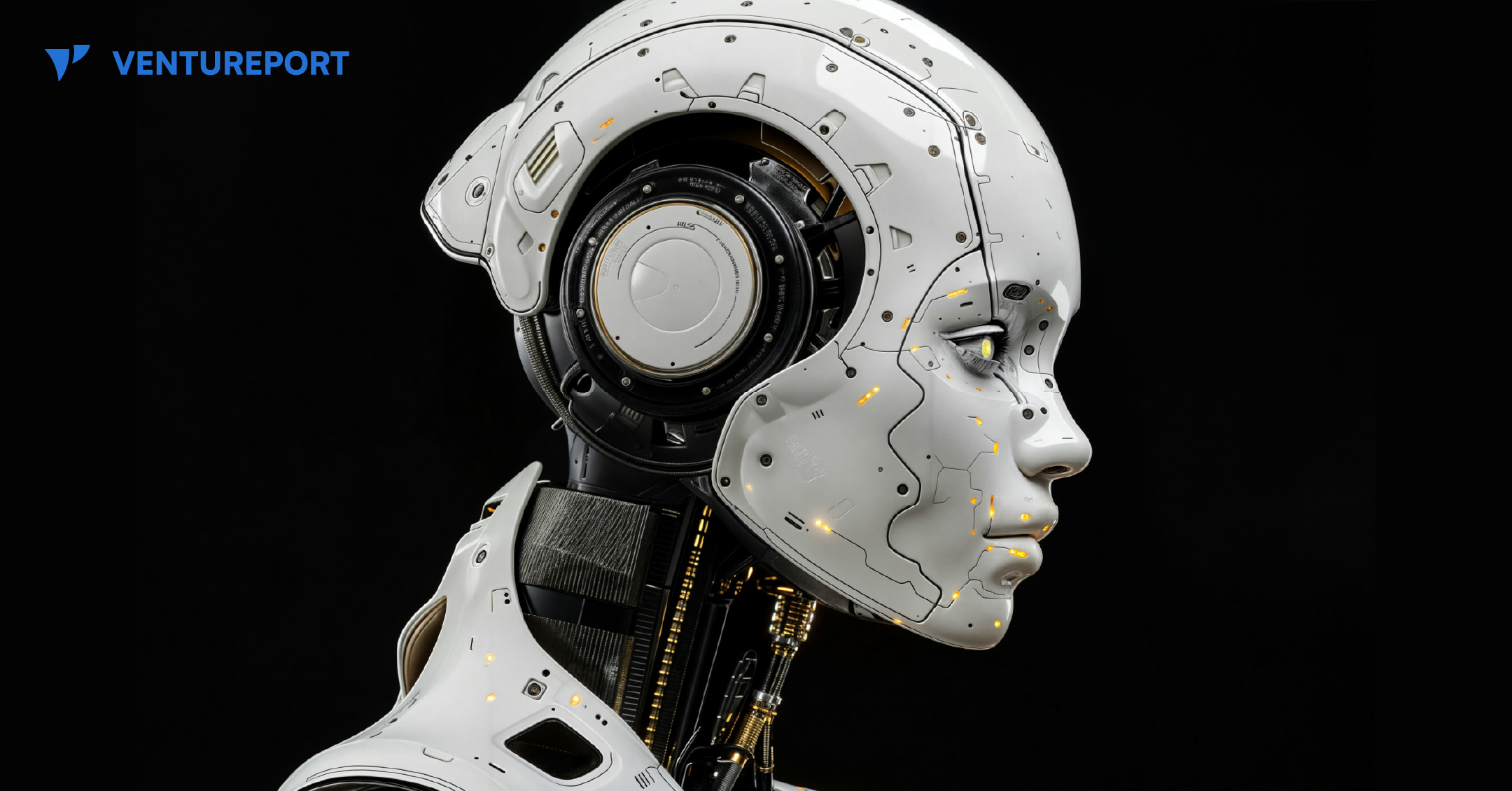
A face of a humanoid robot, side view on black background. PHOTO: UNSPLASH
Humanoid robots are shifting from sci-fi speculation to engineering reality, and the pace of progress is prompting investors to reassess how the next decade of physical automation will unfold. ALM Ventures has launched a new US$100 million early-stage fund aimed squarely at this moment—one where advances in robot control, embodied AI and spatial intelligence are beginning to converge into something commercially meaningful.
ALM Ventures Fund I, is designed for the earliest stages of company formation, targeting seed and pre-seed teams building the foundations of humanoid deployment. It’s a concentrated fund that seeks to take early ownership in a sector that many now consider the next major technological frontier.
For Founder and General Partner Modar Alaoui, the timing is not accidental. “After years of research, humanoids are finally entering a phase where performance, reliability and cost are converging toward commercial viability”, he said. “What the category needs now is focused capital and deep technical diligence to turn prototypes into scalable, enduring companies”.
That framing captures a shift happening across robotics: the field is moving out of the lab and into early commercial readiness. Improvements in perception systems, model-based reasoning and motion control are accelerating the transition. Advances in simulation are also lowering the complexity and cost of integrating humanoid platforms into real environments. As these systems become more capable, the gap between research prototypes and market-ready products is narrowing.
ALM Ventures is positioning itself at this inflection point. Fund I’s thesis centers on the core technologies required to scale humanoids safely and economically. This includes next-generation robot platforms, spatial reasoning engines, embodied intelligence models, world-modeling systems and the infrastructure needed for early deployment. Rather than chasing every robotics trend, the fund is concentrating on the essential layers that will determine whether humanoids can work reliably outside controlled settings.
The firm isn’t starting from zero. During the fund’s formation, ALM Ventures made ten early investments that directly align with its investment focus. The portfolio includes companies building at different layers of the humanoid stack, such as Sanctuary AI, Weave Robotics, Emancro, High Torque Robotics, MicroFactory, Mbodi, Adamo, Haptica Robotics, UMA and O-ID. The list reflects a broad but intentional spread, from hardware to intelligence to manufacturing approaches, all oriented toward enabling scalable physical AI.
Beyond capital, ALM Ventures has been shaping the ecosystem through its global Humanoids Summit series in Silicon Valley, London and Tokyo. The series gives the firm early visibility into emerging technologies, pre-incorporation teams and the senior leaders steering the global robotics landscape. That vantage point has helped the firm identify where commercialization is truly taking root and where bottlenecks still exist.
The rise of humanoids is often compared to the early days of self-driving cars: a long arc of research suddenly meeting an acceleration point. What separates this moment is that advances in embodied AI and spatial intelligence are giving robots a more intuitive understanding of the physical world, making them easier to deploy, teach and scale. ALM Ventures’ Fund I is an attempt to capture that transition while shaping the companies that could define the next technological era.
With US$100 million dedicated to the earliest builders in the space, ALM Ventures is signaling its belief that humanoids are not just another robotics cycle—they may be the next major platform shift in AI.