
Skip the slogans—real Women’s Day campaigns create impact that lasts
Updated
March 6, 2026 1:23 AM

Mother Armenia monument in Victory Park, Gyumri city, Armenia. PHOTO: ADOBE STOCK
Women’s Day offers brands an opportunity to show what they stand for through meaningful action. But the strongest International Women’s Day campaigns do more than say “thank you”. They speak to women’s everyday lives.
Instead of big, vague empowerment slogans, some brands focus on small moments that shape confidence and wellbeing. Think about how we compliment young girls, how safe public spaces feel, what comfort really looks like and how friendship plays help women grow. When a campaign is built on a real insight and backed by something practical, it lands harder and lasts longer.
If you’re a startup planning a Women’s Day initiative, there’s value in studying what actually works. The examples below show how clarity, credibility and usefulness can turn International Women’s Day into something that feels meaningful and on-brand.

To celebrate the International Day of the Girl on October 11, 2025, Dove launched #ChangeTheCompliment—a campaign that asked parents and caregivers to rethink how they praise girls. Instead of defaulting to looks-based comments, Dove encouraged adults to acknowledge qualities like resilience, intelligence and determination alongside beauty.
The idea was grounded in data from Dove’s 2024 Real State of Beauty report, which found that more than 60% of girls feel pressure to be beautiful. Dove brought the message to life through a digital film showing parents broadening their praise in everyday moments.
In Canada, the campaign expanded through a partnership with psychologist Dr. Vanessa Lapointe, who helped anchor #ChangeTheCompliment in expert insight. She linked the campaign’s core message to Dove’s long-running Self-Esteem Project, launched in 2004 to provide free, evidence-based tools developed with psychologists and body image experts. Some of these tools included “Confident Me”, a classroom workshop on body confidence and “Amazing Me”, age-appropriate lessons designed to support self-esteem at school.
What worked here is that it didn’t stay inside a brand video. Parents, teachers and creators joined in by sharing their own examples online, posting revised compliments, building quick classroom activities or filming short clips where they swapped appearance-based praise for character-based words. From social posts to simple at-home conversations, the idea travelled beyond the original film and made participation easy.
Startup takeaway: Don’t build a Women’s Day campaign around a fuzzy theme. Focus on specific, everyday behaviors your audience relates to and design your campaign to shift them. Specificity makes your message practical and memorable.
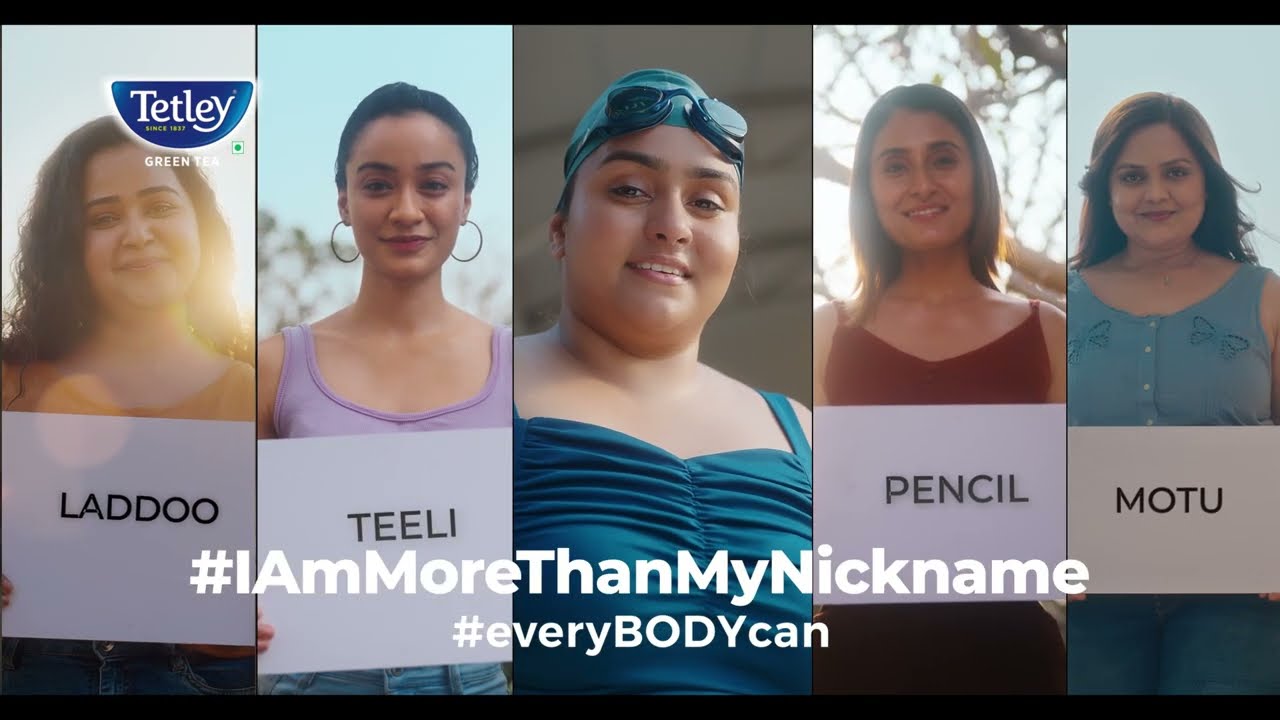
In March 2024, Tetley Green Tea Immune launched the “I Am More Than My Nickname” campaign in India to challenge a common social habit: labeling someone’s fitness based on how their body looks. In many communities, body-type nicknames are used casually. Some of them might sound harmless, but they can chip away at confidence and self-worth over time. Tetley’s point was simple: fitness isn’t a body size. It’s strength, health and well-being.
The campaign centered on a digital film featuring a young girl nicknamed “Golu”, a Hindi term often used to describe someone as chubby. Throughout the film, she’s judged before she even tries, with people deciding what she can and cannot do based on her appearance. As the story unfolds, she pushes back. The film closes with women of different body types holding placards displaying various nicknames, ending with a clear line: “My Body Can, Your Body Can, Every Body Can”. It’s a strong example of a brand taking a familiar social habit and giving people a new way to see it.
Startup takeaway: Look for one small, common behaviour your audience sees every day. Then give people a simple way to engage with it, whether that’s sharing a story, rethinking a phrase or calling out a habit. When participation is baked into the idea, the campaign spreads naturally.

For International Anti-Street Harassment Week 2025, L'Oréal Paris launched its “Never Your Fault” campaign as part of its Stand Up Against Street Harassment program. The campaign drew on L’Oréal Paris research with Ipsos showing the scale of the problem: 75% of women reported experiencing harassment, and 60% said they adjust their clothing or appearance in public.
The message was clear: harassment is never the victim’s fault, and public spaces should feel safer for women. That matters because a lot of women still end up internalizing blame and changing how they dress just to lower the risk.
The campaign also came with a clear next step. It builds on L’Oréal’s partnership with Right To Be, an international NGO focused on stopping harassment, which began in 2020. Through Right To Be’s 5D framework—Distract, Delegate, Document, Delay and Direct—the program teaches bystanders simple, practical ways to intervene safely in the moment.
Startup takeaway: If you’re addressing a sensitive issue in a Women’s Day campaign, don’t go about it alone. Work with experts who bring trust, depth and real tools. It makes your message stronger fast.
.jpg)
In 2025, Van Heusen Innerwear marked Women’s Day with a single visual that many women immediately recognized. The poster showed a crumpled shirt with a bra placed over it, capturing that end-of-day moment of relief.
The slogan on the poster—“Happy Women’s Day has nothing to do with us”—makes the point that real comfort is personal, not performative. The message wasn’t really about taking off a bra, but about the pressure women carry all day, including the expectation to look a certain way, feel a certain way and still keep going. By leaning into a real, everyday experience, Van Heusen positioned itself as a brand that listens rather than lectures.
Startup takeaway: Skip the predictable in Women’s Day slogans. Find an honest, lived moment and build around it. When your campaign reflects real life, it feels relevant instead of seasonal.

In 2025, Mattel celebrated International Women’s Day by honoring real-life female friendship duos with one-of-a-kind Barbie Role Model dolls made in their likeness. The campaign focused on the idea that strong friendships help women grow, succeed and support each other. Instead of spotlighting individual achievement, it highlighted collective strength—women empowering women.
By featuring duos such as Alicia Keys and Ann Mincieli, Jordan Chiles and Jade Carey and other global pairs across sports, entertainment and advocacy, the campaign framed friendship as a source of confidence and ambition from girlhood onward. To make it practical, Mattel partnered with psychologist and best-selling author Dr. Marisa G. Franco, who shared simple advice for girls: take initiative in making friends, assume people will like you, express appreciation openly, try new activities together and prioritize quality over quantity in relationships.
Startup takeaway: If your Women’s Day campaign is built on a social insight, make it actionable. Storytelling helps, but tools, education and frameworks are what make it useful.
Across these International Women’s Day campaigns, the playbook is consistent: choose one real, everyday behaviour and shift it. Whether it’s the way we compliment girls, the labels we use, how bystanders intervene, what comfort feels like or how we nurture friendships, each brand anchored its message in something tangible and built action around it.
For startups, the lesson is straightforward: be precise in what you’re addressing, be credible in how you show up and make your message usable. Attention is easy to grab, but relevance is harder to earn and far more valuable.
Keep Reading
"Discover how emerging sustainability trends in digital marketing are reshaping the way small businesses connect with eco-conscious consumers."
Updated
January 8, 2026 6:35 PM
.jpg)
Protestor holding a sign "NO BUSINESS ON A DEAD PLANET" during a march. PHOTO: UNSPLASH
Sustainability has become more than just a buzzword—it’s a movement that’s reshaping business practices across industries. For small businesses, aligning with sustainable values isn’t just about doing the right thing; it’s about staying competitive in a world where consumers increasingly prioritize eco-conscious brands.
In the digital age, sustainable marketing is evolving rapidly, offering businesses new ways to reduce their environmental impact while engaging with customers who care deeply about the planet. Let’s take a closer look at the top trends driving sustainable marketing today and their implications for small businesses.
Most people don’t realize that online advertising has an environmental cost. Every time an ad is displayed, clicked on, or streamed as a video, it consumes energy. This energy powers the servers, data centers, and networks that host and deliver these ads. The problem is that much of this energy still comes from non-renewable sources like coal and natural gas, which contribute to carbon emissions.
For small businesses, this could mean optimizing ad campaigns to reduce unnecessary data usage or using platforms that offset their carbon emissions. Additionally, adopting lighter website designs and faster-loading ads can not only reduce energy consumption but also improve user experience—leading to better engagement and conversion rates.
Small businesses can stand out by making their digital campaigns both efficient and eco-friendly. Highlighting these efforts in marketing messages can appeal to sustainability-minded customers while showcasing innovation.
Sustainable packaging is no longer optional—it’s an expectation. But for small businesses, it’s not just about switching to biodegradable materials. It’s about effectively communicating those efforts to customers through digital channels.
Brands are using their websites, social media, and email marketing to share the stories behind their packaging choices. Whether it’s sourcing recycled materials or partnering with eco-friendly suppliers, transparency is key. Educational content, such as videos or infographics, can help customers understand the impact of their purchases and feel good about supporting a brand.
By using digital platforms to tell the story of their sustainability efforts, small businesses can create deeper emotional connections with customers. Sharing behind-the-scenes processes or celebrating packaging milestones can boost loyalty and differentiate a brand from competitors.
Influencer marketing has become a powerful tool for brands, and the rise of eco-conscious influencers is creating new opportunities for businesses that prioritize sustainability. These influencers focus on topics like waste reduction, ethical consumption, and eco-friendly lifestyles, making them an ideal partner for sustainable brands.
Collaborating with such influencers allows small businesses to reach niche audiences that are already committed to sustainable living. These partnerships feel more authentic compared to traditional ads, as followers trust influencers to recommend products that align with their values.
Even small businesses with limited budgets can benefit from micro-influencers —individuals with smaller but highly engaged audiences. Partnering with eco-conscious influencers can amplify a business’s sustainability message and create a ripple effect of awareness.
Consumers today are more skeptical of vague claims like "green" or "eco-friendly." They want specifics. Brands that embrace transparency by sharing measurable data about their sustainability efforts are earning trust and loyalty.
For example, brands that disclose the carbon footprint of their products or provide detailed information about their supply chains stand out in an age of greenwashing (misleading sustainability claims). This trend is particularly relevant for small businesses, as customers often expect smaller, local brands to be more ethical and transparent.
Being upfront about sustainability efforts—even if they’re still a work in progress—can build credibility. Sharing challenges, milestones, and small wins through social media or email newsletters makes the brand relatable and trustworthy.
The circular economy—a model in which products are reused, repaired, or recycled instead of discarded—is gaining momentum. Small businesses are finding creative ways to incorporate this principle into their operations and marketing.
For example, some businesses encourage customers to return used products in exchange for discounts or loyalty points. Others upcycle returned goods into new products and share this process with customers through digital platforms.
By participating in the circular economy, small businesses can differentiate themselves while building a loyal customer base. Promoting these initiatives online—whether through videos, blogs, or customer testimonials—can amplify their impact and attract eco-conscious buyers.
Sustainable marketing is more than a trend—it’s becoming a necessity for businesses of all sizes. For small businesses, it represents both an opportunity to stand out in a competitive market and a chance to make a meaningful impact on the planet.
Emerging trends like green digital advertising, circular economy initiatives, and transparency are reshaping how brands connect with their audiences. By embracing these practices, small businesses can attract eco-conscious consumers, build loyalty, and foster trust—all while reducing their environmental footprint.
The future of marketing belongs to those who see sustainability not as an add-on, but as the foundation of their growth. For small businesses ready to take on this challenge, the rewards go beyond profits—they include making a lasting, positive impact on the planet and the people who inhabit it.