
Skip the slogans—real Women’s Day campaigns create impact that lasts
Updated
March 6, 2026 1:23 AM

Mother Armenia monument in Victory Park, Gyumri city, Armenia. PHOTO: ADOBE STOCK
Women’s Day offers brands an opportunity to show what they stand for through meaningful action. But the strongest International Women’s Day campaigns do more than say “thank you”. They speak to women’s everyday lives.
Instead of big, vague empowerment slogans, some brands focus on small moments that shape confidence and wellbeing. Think about how we compliment young girls, how safe public spaces feel, what comfort really looks like and how friendship plays help women grow. When a campaign is built on a real insight and backed by something practical, it lands harder and lasts longer.
If you’re a startup planning a Women’s Day initiative, there’s value in studying what actually works. The examples below show how clarity, credibility and usefulness can turn International Women’s Day into something that feels meaningful and on-brand.

To celebrate the International Day of the Girl on October 11, 2025, Dove launched #ChangeTheCompliment—a campaign that asked parents and caregivers to rethink how they praise girls. Instead of defaulting to looks-based comments, Dove encouraged adults to acknowledge qualities like resilience, intelligence and determination alongside beauty.
The idea was grounded in data from Dove’s 2024 Real State of Beauty report, which found that more than 60% of girls feel pressure to be beautiful. Dove brought the message to life through a digital film showing parents broadening their praise in everyday moments.
In Canada, the campaign expanded through a partnership with psychologist Dr. Vanessa Lapointe, who helped anchor #ChangeTheCompliment in expert insight. She linked the campaign’s core message to Dove’s long-running Self-Esteem Project, launched in 2004 to provide free, evidence-based tools developed with psychologists and body image experts. Some of these tools included “Confident Me”, a classroom workshop on body confidence and “Amazing Me”, age-appropriate lessons designed to support self-esteem at school.
What worked here is that it didn’t stay inside a brand video. Parents, teachers and creators joined in by sharing their own examples online, posting revised compliments, building quick classroom activities or filming short clips where they swapped appearance-based praise for character-based words. From social posts to simple at-home conversations, the idea travelled beyond the original film and made participation easy.
Startup takeaway: Don’t build a Women’s Day campaign around a fuzzy theme. Focus on specific, everyday behaviors your audience relates to and design your campaign to shift them. Specificity makes your message practical and memorable.
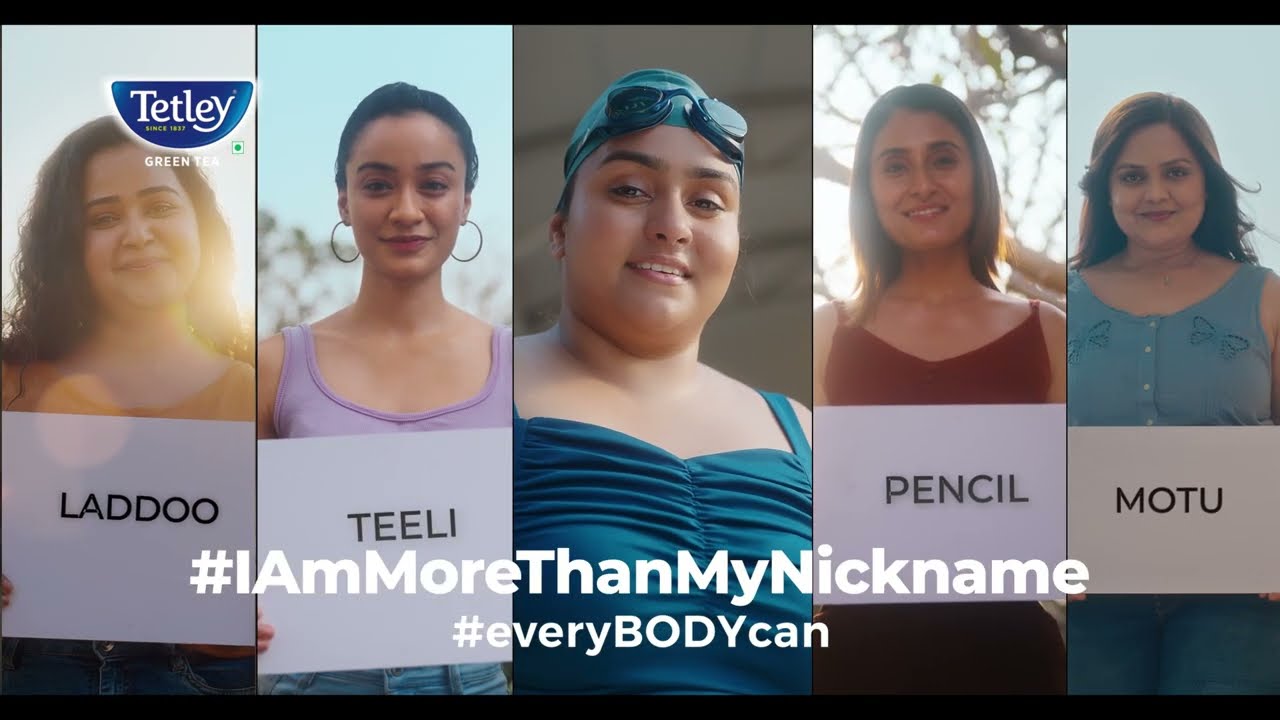
In March 2024, Tetley Green Tea Immune launched the “I Am More Than My Nickname” campaign in India to challenge a common social habit: labeling someone’s fitness based on how their body looks. In many communities, body-type nicknames are used casually. Some of them might sound harmless, but they can chip away at confidence and self-worth over time. Tetley’s point was simple: fitness isn’t a body size. It’s strength, health and well-being.
The campaign centered on a digital film featuring a young girl nicknamed “Golu”, a Hindi term often used to describe someone as chubby. Throughout the film, she’s judged before she even tries, with people deciding what she can and cannot do based on her appearance. As the story unfolds, she pushes back. The film closes with women of different body types holding placards displaying various nicknames, ending with a clear line: “My Body Can, Your Body Can, Every Body Can”. It’s a strong example of a brand taking a familiar social habit and giving people a new way to see it.
Startup takeaway: Look for one small, common behaviour your audience sees every day. Then give people a simple way to engage with it, whether that’s sharing a story, rethinking a phrase or calling out a habit. When participation is baked into the idea, the campaign spreads naturally.

For International Anti-Street Harassment Week 2025, L'Oréal Paris launched its “Never Your Fault” campaign as part of its Stand Up Against Street Harassment program. The campaign drew on L’Oréal Paris research with Ipsos showing the scale of the problem: 75% of women reported experiencing harassment, and 60% said they adjust their clothing or appearance in public.
The message was clear: harassment is never the victim’s fault, and public spaces should feel safer for women. That matters because a lot of women still end up internalizing blame and changing how they dress just to lower the risk.
The campaign also came with a clear next step. It builds on L’Oréal’s partnership with Right To Be, an international NGO focused on stopping harassment, which began in 2020. Through Right To Be’s 5D framework—Distract, Delegate, Document, Delay and Direct—the program teaches bystanders simple, practical ways to intervene safely in the moment.
Startup takeaway: If you’re addressing a sensitive issue in a Women’s Day campaign, don’t go about it alone. Work with experts who bring trust, depth and real tools. It makes your message stronger fast.
.jpg)
In 2025, Van Heusen Innerwear marked Women’s Day with a single visual that many women immediately recognized. The poster showed a crumpled shirt with a bra placed over it, capturing that end-of-day moment of relief.
The slogan on the poster—“Happy Women’s Day has nothing to do with us”—makes the point that real comfort is personal, not performative. The message wasn’t really about taking off a bra, but about the pressure women carry all day, including the expectation to look a certain way, feel a certain way and still keep going. By leaning into a real, everyday experience, Van Heusen positioned itself as a brand that listens rather than lectures.
Startup takeaway: Skip the predictable in Women’s Day slogans. Find an honest, lived moment and build around it. When your campaign reflects real life, it feels relevant instead of seasonal.

In 2025, Mattel celebrated International Women’s Day by honoring real-life female friendship duos with one-of-a-kind Barbie Role Model dolls made in their likeness. The campaign focused on the idea that strong friendships help women grow, succeed and support each other. Instead of spotlighting individual achievement, it highlighted collective strength—women empowering women.
By featuring duos such as Alicia Keys and Ann Mincieli, Jordan Chiles and Jade Carey and other global pairs across sports, entertainment and advocacy, the campaign framed friendship as a source of confidence and ambition from girlhood onward. To make it practical, Mattel partnered with psychologist and best-selling author Dr. Marisa G. Franco, who shared simple advice for girls: take initiative in making friends, assume people will like you, express appreciation openly, try new activities together and prioritize quality over quantity in relationships.
Startup takeaway: If your Women’s Day campaign is built on a social insight, make it actionable. Storytelling helps, but tools, education and frameworks are what make it useful.
Across these International Women’s Day campaigns, the playbook is consistent: choose one real, everyday behaviour and shift it. Whether it’s the way we compliment girls, the labels we use, how bystanders intervene, what comfort feels like or how we nurture friendships, each brand anchored its message in something tangible and built action around it.
For startups, the lesson is straightforward: be precise in what you’re addressing, be credible in how you show up and make your message usable. Attention is easy to grab, but relevance is harder to earn and far more valuable.
Keep Reading
Cyberport Venture Capital Forum (CVCF) 2025 Returns Under the Theme "The Innovation–Venture Nexus: Igniting Transformative Success"
Updated
January 8, 2026 6:34 PM
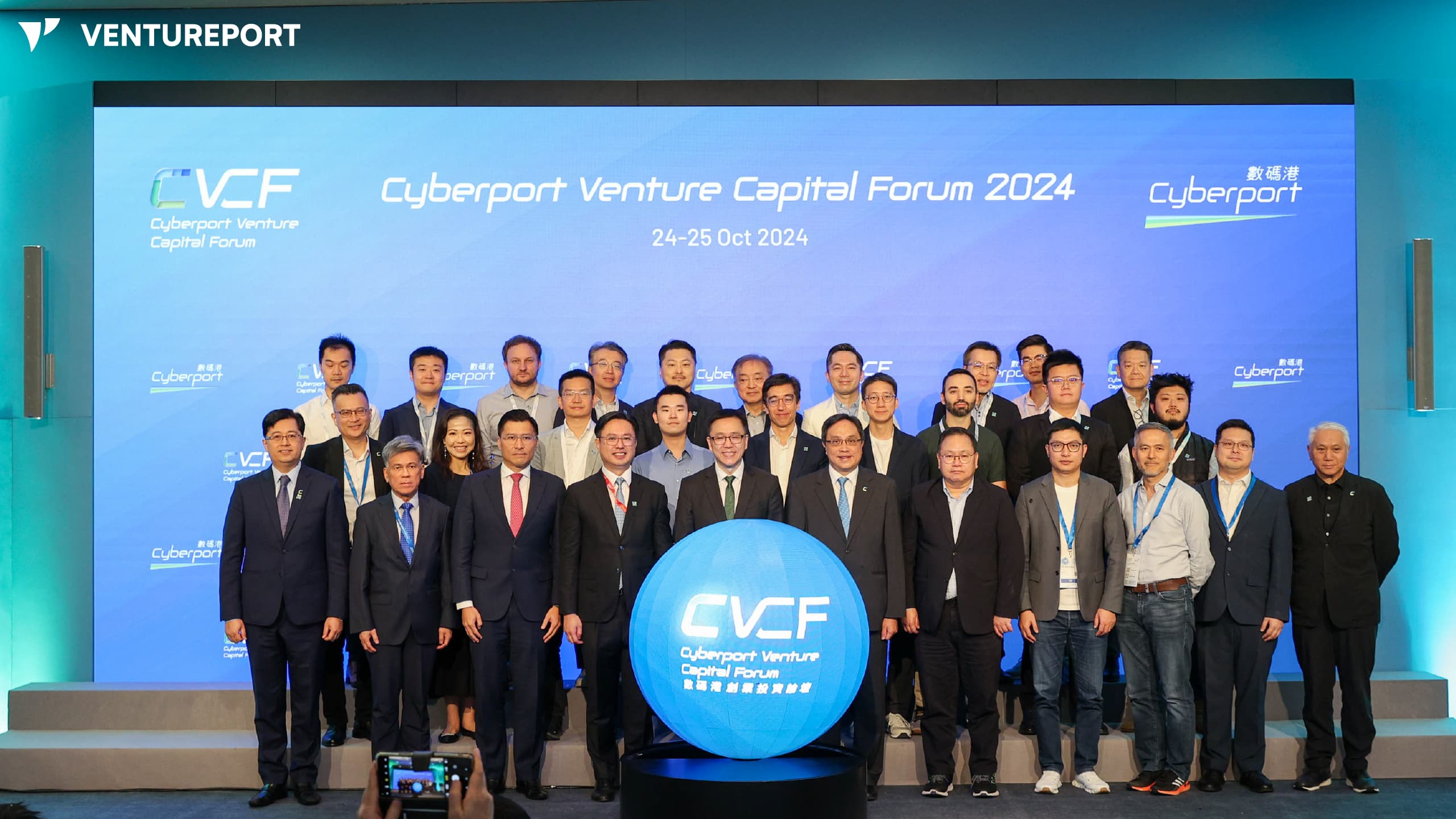
As the venture capital world recalibrates amid global uncertainty, Cyberport Venture Capital Forum (CVCF) 2025 returns on November 6-7 under the theme “The Innovation–Venture Nexus: Igniting Transformative Success”. PHOTO: CYBERPORT
The two-day forum will once again bring together global and local leaders to explore how technology, capital and collaboration intersect to drive the next wave of growth. Entrepreneurs, investors and innovators will exchange insights on artificial intelligence, digital assets and Web 3.0—technologies that are reshaping industries and redefining both risk and opportunity.
As industries face challenges from geopolitical shifts, regulatory changes and market volatility, CVCF will serve as a platform to address a defining question: How can innovation remain bold and visionary in an ever-evolving funding landscape? Through keynotes, panel discussions and interactive sessions, the forum will spotlight the transformative potential of technologies like artificial intelligence (AI), Web 3.0 and digital assets while offering practical strategies to turn disruption into market advantage.
With investor matching, power pitches, start-up clinics and workshops, CVCF 2025 offers a front-row seat to emerging markets across Asia, the Middle East, the United States and Europe, connecting forward-thinking investors with visionary entrepreneurs. It is not just a conference—it’s a bridge between ideas and investment designed to ignite breakthroughs and foster growth in the global innovation ecosystem. It provides a unique platform for startups and investors to navigate the complexities of today’s economy while seizing new opportunities for collaboration and growth.
To preview the conversations ahead, three speakers share perspectives on trends shaping the future of innovation, investment and entrepreneurship, setting the stage for the discussions that will unfold at CVCF 2025.

Co-founder and CEO, AIFT
Session: Riding the Middle East Momentum — Capitalizing Unique Innovation and Investment Strengths
As the Middle East accelerates its shift from oil dependence toward digital diversification, the region is becoming a focal point for blockchain and AI investment. In his upcoming session, Alvin Kwock will explore the region’s innovation potential — and here, he shares some of his views on the opportunities shaping that transformation.
Alvin Kwock, co-founder and CEO of AIFT, oversees operations across three verticals: AI and cybersecurity (Vulcan and Cymetrics), blockchain (OneInfinity and OneSavie) and pet and B2C (OneDegree). With local operations spanning Asia and the Middle East, AIFT is expanding rapidly.
When asked about the Middle East’s rapid rise as a global innovation hub, Kwock said that the region is shifting from a petroleum-dependent economy to one increasingly diversified through technology and innovation, with markets advancing blockchain and AI technologies. AIFT is prioritizing expansion in the UAE and Saudi Arabia, where AI investment and regulatory openness create immense potential. Hong Kong’s expertise in financial risk management acts as a “confidence anchor” for international markets, allowing AIFT to deliver compliant solutions tailored for emerging markets while developing Sharia-compliant, regulation-aligned technologies.
“Hong Kong’s storied expertise in financial risk management acts as a ‘confidence anchor’ for international markets.”
He also noted that the region’s accelerating digital adoption opens unique opportunities for AI, insurtech and fintech. The UAE and Bahrain’ embrace of virtual assets, combined with Hong Kong’s proven frameworks, provide a foundation for localized solutions. By integrating risk oversight and regulatory best practices, AIFT supports stable market growth and delivers specialized insurance to enhance resilience in emerging markets.
On managing geopolitical risk, Kwock explained that AIFT mitigates exposure through local partnerships, regulatory alignment and cultural understanding. By hiring Arab employees and ensuring operations align with Islamic values, AIFT strengthens Hong Kong–Middle East collaboration. This approach, he said, offers a blueprint for startups: prioritize local engagement and flexibility to balance risk and growth.

Founder, Hash Global Advisory Company Ltd.
Session: From Hype to Holdings — Where Smart Money Goes in Digital Assets 2025–2027
With institutional frameworks for Web 3.0 maturing, investors are increasingly focused on sustainable value creation. In his session, Kang Shen will discuss how smart capital is moving beyond speculation toward real-world utility—themes echoed in his reflections shared ahead of the forum.
Kang Shen, founder of Hash Global Advisory, applies value-investing principles to the Web 3.0 sector. A graduate of Fudan University and the University of Chicago Booth School of Business and a Chartered Financial Analyst (CFA), Shen has more than 20 years of financial industry experience with roles at the Industrial Bank of Japan, PIMCO and Bosera Asset Management.
On the tokenization of real-world assets, Shen observed that the RWA sector remains in its early phase of regulatory and infrastructure development. Over the next two years, as compliance systems mature, scalable projects with tangible value will emerge. For now, his approach remains cautious, focusing on fundamentals rather than inflated market narratives.
He also shared his optimism for three areas with the most potential upside: Web 3.0 Culture and Entertainment—including projects like Meet48 and Offgrid; Web 3.0 E-Commerce and Payments—with ventures such as WSPN, RD Technologies and Bitgoods; and On-Chain Data and Data Assets—such as Chainbase and Data Dance Chain. These, he noted, represent meaningful real-world applications of Web 3.0 technologies.
“Web 3.0 is currently undergoing a process of value realignment.”
Shen emphasized that Hash Global has always been committed to applying value-investing principles to the field of digital asset management. As early as 2019, the firm proposed using a monetary equation framework to evaluate ecosystem tokens and recently defined a new class—“Value-Functional Tokens”. He believes Web 3.0 is now undergoing a process of value realignment, where genuine utility will determine long-term worth.

Founder and CEO, Zhejiang Linctex Digital Technology Co., Ltd. (Style3D)
Session: Strategic Exits — IPO Paths for Expanding Rapid-Growth Companies
The fashion and textile industry is undergoing rapid digital transformation. Against this backdrop, Eric Liu will join CVCF 2025 to discuss strategic growth and expansion paths for fast-scaling companies.
Eric Liu, founder and CEO of Zhejiang Linctex Digital Technology Co., Ltd. (Style3D), holds dual master’s degrees in applied computing and molecular biology from VUB University in Belgium and a PhD in Electronic Information Engineering from Zhejiang University. A serial entrepreneur in the textile industry, Liu founded Style3D to drive digital transformation through AI and 3D technology.
He explained that Style3D’s fusion of AI and 3D technology builds a full-chain digital ecosystem. AI-driven design tools powered by large language models shorten design cycles from weeks to hours, while 3D simulation reduces prototyping costs by 30 percent. The company’s self-developed simulation engine supports virtual fashion shows and sustainability initiatives by optimizing fabric usage.
“Style3D’s fusion of AI and 3D technology builds a full-chain digital ecosystem.”
On the company’s origins, Liu said that traditional fashion R&D cycles are slow and costly. By integrating AI for pattern generation and 3D for design-to-production links, Style3D overcomes these barriers. With over 200 core patents and an extensive database of 2.3 million fabric properties and 1.2 million garment templates, the company leads digital fashion innovation.
Looking ahead, Liu noted that Style3D reinvests 40 percent of annual revenue into R&D, develops AI-driven trend prediction tools and expands innovation hubs in Paris and Milan. By leading the standardization of “3D Digital Fashion Infrastructure”, Style3D is setting the industry benchmark for the next era of intelligent manufacturing.
As global innovators prepare to gather at CVCF 2025, the forum promises to ignite ideas, discoveries and partnerships that will shape the future of technology and investment. From cutting-edge insights to practical strategies, the conversations starting here are just the beginning of a journey to redefine what’s possible in the global innovation ecosystem.
.jpg)