
Skip the slogans—real Women’s Day campaigns create impact that lasts
Updated
March 6, 2026 1:23 AM

Mother Armenia monument in Victory Park, Gyumri city, Armenia. PHOTO: ADOBE STOCK
Women’s Day offers brands an opportunity to show what they stand for through meaningful action. But the strongest International Women’s Day campaigns do more than say “thank you”. They speak to women’s everyday lives.
Instead of big, vague empowerment slogans, some brands focus on small moments that shape confidence and wellbeing. Think about how we compliment young girls, how safe public spaces feel, what comfort really looks like and how friendship plays help women grow. When a campaign is built on a real insight and backed by something practical, it lands harder and lasts longer.
If you’re a startup planning a Women’s Day initiative, there’s value in studying what actually works. The examples below show how clarity, credibility and usefulness can turn International Women’s Day into something that feels meaningful and on-brand.

To celebrate the International Day of the Girl on October 11, 2025, Dove launched #ChangeTheCompliment—a campaign that asked parents and caregivers to rethink how they praise girls. Instead of defaulting to looks-based comments, Dove encouraged adults to acknowledge qualities like resilience, intelligence and determination alongside beauty.
The idea was grounded in data from Dove’s 2024 Real State of Beauty report, which found that more than 60% of girls feel pressure to be beautiful. Dove brought the message to life through a digital film showing parents broadening their praise in everyday moments.
In Canada, the campaign expanded through a partnership with psychologist Dr. Vanessa Lapointe, who helped anchor #ChangeTheCompliment in expert insight. She linked the campaign’s core message to Dove’s long-running Self-Esteem Project, launched in 2004 to provide free, evidence-based tools developed with psychologists and body image experts. Some of these tools included “Confident Me”, a classroom workshop on body confidence and “Amazing Me”, age-appropriate lessons designed to support self-esteem at school.
What worked here is that it didn’t stay inside a brand video. Parents, teachers and creators joined in by sharing their own examples online, posting revised compliments, building quick classroom activities or filming short clips where they swapped appearance-based praise for character-based words. From social posts to simple at-home conversations, the idea travelled beyond the original film and made participation easy.
Startup takeaway: Don’t build a Women’s Day campaign around a fuzzy theme. Focus on specific, everyday behaviors your audience relates to and design your campaign to shift them. Specificity makes your message practical and memorable.
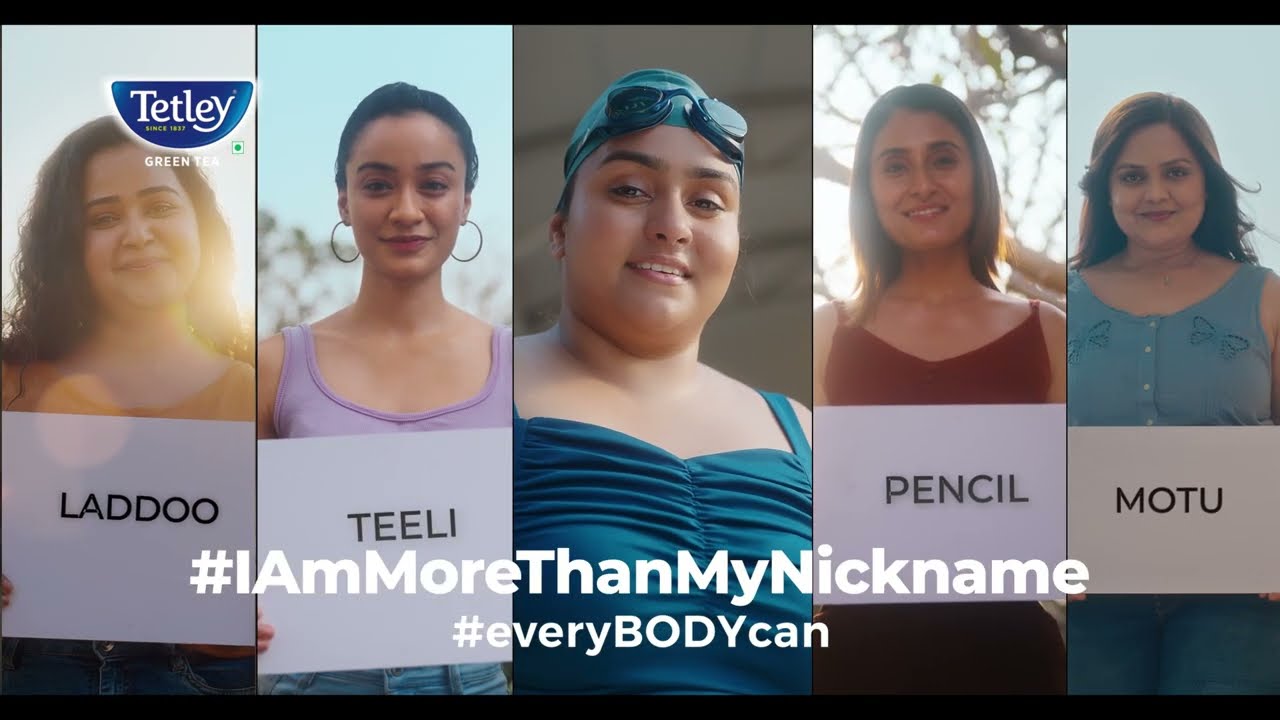
In March 2024, Tetley Green Tea Immune launched the “I Am More Than My Nickname” campaign in India to challenge a common social habit: labeling someone’s fitness based on how their body looks. In many communities, body-type nicknames are used casually. Some of them might sound harmless, but they can chip away at confidence and self-worth over time. Tetley’s point was simple: fitness isn’t a body size. It’s strength, health and well-being.
The campaign centered on a digital film featuring a young girl nicknamed “Golu”, a Hindi term often used to describe someone as chubby. Throughout the film, she’s judged before she even tries, with people deciding what she can and cannot do based on her appearance. As the story unfolds, she pushes back. The film closes with women of different body types holding placards displaying various nicknames, ending with a clear line: “My Body Can, Your Body Can, Every Body Can”. It’s a strong example of a brand taking a familiar social habit and giving people a new way to see it.
Startup takeaway: Look for one small, common behaviour your audience sees every day. Then give people a simple way to engage with it, whether that’s sharing a story, rethinking a phrase or calling out a habit. When participation is baked into the idea, the campaign spreads naturally.

For International Anti-Street Harassment Week 2025, L'Oréal Paris launched its “Never Your Fault” campaign as part of its Stand Up Against Street Harassment program. The campaign drew on L’Oréal Paris research with Ipsos showing the scale of the problem: 75% of women reported experiencing harassment, and 60% said they adjust their clothing or appearance in public.
The message was clear: harassment is never the victim’s fault, and public spaces should feel safer for women. That matters because a lot of women still end up internalizing blame and changing how they dress just to lower the risk.
The campaign also came with a clear next step. It builds on L’Oréal’s partnership with Right To Be, an international NGO focused on stopping harassment, which began in 2020. Through Right To Be’s 5D framework—Distract, Delegate, Document, Delay and Direct—the program teaches bystanders simple, practical ways to intervene safely in the moment.
Startup takeaway: If you’re addressing a sensitive issue in a Women’s Day campaign, don’t go about it alone. Work with experts who bring trust, depth and real tools. It makes your message stronger fast.
.jpg)
In 2025, Van Heusen Innerwear marked Women’s Day with a single visual that many women immediately recognized. The poster showed a crumpled shirt with a bra placed over it, capturing that end-of-day moment of relief.
The slogan on the poster—“Happy Women’s Day has nothing to do with us”—makes the point that real comfort is personal, not performative. The message wasn’t really about taking off a bra, but about the pressure women carry all day, including the expectation to look a certain way, feel a certain way and still keep going. By leaning into a real, everyday experience, Van Heusen positioned itself as a brand that listens rather than lectures.
Startup takeaway: Skip the predictable in Women’s Day slogans. Find an honest, lived moment and build around it. When your campaign reflects real life, it feels relevant instead of seasonal.

In 2025, Mattel celebrated International Women’s Day by honoring real-life female friendship duos with one-of-a-kind Barbie Role Model dolls made in their likeness. The campaign focused on the idea that strong friendships help women grow, succeed and support each other. Instead of spotlighting individual achievement, it highlighted collective strength—women empowering women.
By featuring duos such as Alicia Keys and Ann Mincieli, Jordan Chiles and Jade Carey and other global pairs across sports, entertainment and advocacy, the campaign framed friendship as a source of confidence and ambition from girlhood onward. To make it practical, Mattel partnered with psychologist and best-selling author Dr. Marisa G. Franco, who shared simple advice for girls: take initiative in making friends, assume people will like you, express appreciation openly, try new activities together and prioritize quality over quantity in relationships.
Startup takeaway: If your Women’s Day campaign is built on a social insight, make it actionable. Storytelling helps, but tools, education and frameworks are what make it useful.
Across these International Women’s Day campaigns, the playbook is consistent: choose one real, everyday behaviour and shift it. Whether it’s the way we compliment girls, the labels we use, how bystanders intervene, what comfort feels like or how we nurture friendships, each brand anchored its message in something tangible and built action around it.
For startups, the lesson is straightforward: be precise in what you’re addressing, be credible in how you show up and make your message usable. Attention is easy to grab, but relevance is harder to earn and far more valuable.
Keep Reading
From driving social change to making luxury affordable — Lessons from The Body Shop India
Updated
January 30, 2026 11:43 AM
.jpg)
The Body Shop's storefront. PHOTO: ADOBE STOCK
The Body Shop, known worldwide for its ethical values and cruelty-free beauty products, has had very different results in two of its major markets. In the United States, challenges such as shifting retail trends and tougher competition led to the closure of most physical stores in early 2024. Meanwhile, in India, The Body Shop has risen to become one of its top five global markets. After reaching customers in more than 1,500 Indian cities through its omnichannel network, the company now plans to double its 200-store footprint over the next three to five years.
So what did The Body Shop do in India that proved harder to pull off in the U.S.? Below, we break down why The Body Shop struggled in the U.S., what’s driving The Body Shop India’s growth and what startup founders can learn from the contrast.
In March 2024, The Body Shop’s U.S. unit filed for Chapter 7 bankruptcy and stopped operating its roughly 50 stores. That move effectively ended its brick-and-mortar presence in the country.
A big part of the story is that the U.S. beauty market moved faster than The Body Shop did. Prestige beauty kept growing, and shoppers increasingly gravitated to retailers and brands that feel current and have a strong online presence. Paul Dodd, Chief Innovation Officer at e-commerce fulfilment partner Huboo, have pointed to The Body Shop’s slow approach to digital growth as a major factor behind its decline. With U.S. prestige beauty sales reaching about US$33.9 billion in 2024 and growing at 7% year over year, the demand is clearly there. The brands that stand out and get rewarded were the ones that matched how people now discover products and buy them.
The company also leaned too heavily on stores at a time when stores were getting harder to run. When foot traffic drops and rents rise, the pressure shows up quickly. Shoppers also had more places to go, including Sephora, Ulta, Amazon and direct-to-consumer sites. A similar pattern played out in Canada, where restructuring included store closures and halted e-commerce. It was another sign that North America had become an operational headache, not just a marketing challenge.
Then there’s the branding issue: its “ethical pioneer” position simply stopped being a moat in the U.S. market. Today, cruelty-free and vegan claims are now table stakes across many newer brands, and “clean beauty” messaging is everywhere. “Initially, the purpose-driven brand was revolutionary, so much so that competitors like Drunk Elephant have adopted a similar ethos,” says Dan Hocking, Chief Operating Officer at advertising agency TroubleMaker. “It was a concept that rightly earned success in the 80s and 90s, but The Body Shop didn’t adapt to changing consumer habits and preferences”. Meanwhile, competitors like Lush have kept people talking through stronger creator/influencer marketing, faster product cycles and more immersive in-store experiences.
Internal disruption likely made the turnaround even harder. Reporting on the U.S. bankruptcy points to instability, including the U.S. unit saying it did not have advance notice of decisions tied to the U.K. parent’s restructuring. When leadership decisions land without warning, it becomes harder to plan inventory, fund marketing and commit to a clear digital roadmap.
1. Expansion into tier 2 and 3 cities
For years, India’s beauty industry focused mainly on metropolitan cities. Today, however, increasing internet penetration, rising disposable incomes, exposure to global beauty trends and an appetite for ethical, sustainable brands have fuelled demand in smaller towns. That tailwind matters because India’s beauty and personal care market is expected to reach a gross merchandise value (GMV) of US$30 billion by 2027 and is projected to grow at roughly an 10% CAGR. There’s plenty of room for both premium and “affordable luxury” players that can meet consumer where they are.
The Body Shop has leaned into this shift. Harmeet Singh, Chief Brand Officer of The Body Shop Asia South, has said the brand is expanding into Tier 2 and Tier 3 cities with a focus on central and Northeast India. Reports also point to a clear advantage here: more than 200 stores across dozens of cities, plus online reach into over 1,500 cities. That foundation makes non-metro expansion feel like the next move, not a risky leap.
2. Omni-channel retail strategy for beauty shoppers
Unlike its U.S. front, The Body Shop India has put effort into digital and distribution. Besides its own online store, customers can find the brand on big beauty and retail platforms like Nykaa, Amazon, Flipkart, Tatacliq and Myntra. It has also built more direct routes to purchase through WhatsApp, social commerce, expert chats and live video consultations. For even faster access, it’s on quick-commerce apps like Blinkit and Swiggy.
This strategy is already showing up in the numbers. Nearly 30% of The Body Shop India’s business came from digital channels as of June 2025. Rahul Shanker, Chief Executive of The Body Shop India, has said the brand wants to lift online revenue to 45–50% of total sales by 2030.
This approach lines up with what’s happening in the market. NielsenIQ data found beauty e-commerce and quick-commerce sales in India rose 39% in value between June and November 2024, with offline growth over the same period being just 3%. The logic is simple: if the market is moving online, you want to be easy to buy online.
3. Inclusivity, accessibility and social impact
The Body Shop’s people-first approach shows up not just in its marketing, but in how it runs the business day to day. Inside the company, it has pushed gender sensitivity across teams. Out of 600 employees, it has 10 staff members who are part of the LGBTQA+ spectrum.
In stores, the brand has worked on improving accessibility. In 2024, The Body Shop India launched a Braille initiative for visually impaired customers. The programme introduced Braille category callouts in select locations so shoppers can navigate more independently.
On the sustainability side, the brand ties its message to its supply chain. An example is its long-term partnership with Plastics for Change, a Bengaluru-based social enterprise, to source “Community Fair Trade” recycled plastic for packaging. The collaboration has resulted in more predictable income, safer work and better access to social services and housing and education projects for the waste picker communities, which often include marginalized groups and women.
The same intent can also be seen in its physical retail. The Body Shop India has been converting stores into its “Activist Workshop” format, where everything is made from recycled materials, including store fixtures and interiors. By mid-2024, it had around 20 Activist Workshop stores in India.
4. Pricing that fits the Indian beauty market
In April 2025, The Body Shop India launched its “More Love for Less” campaign to make products more accessible. Through the campaign, the company lowered the prices of more than 60 best-sellers by 28–30%. The goal was to remove a clear barrier for many shoppers while maintaining the same quality.
The company has also positioned this as a pricing reset, not a short-term discount push. It’s meant to widen the funnel, especially among younger consumers aged 18–25, where price has been a major hurdle. That matters even more as the brand expands deeper into Tier 2 and Tier 3 cities, where value is often front and centre.
5. Local marketing that feels made for India
The Body Shop India has leaned into localized marketing in a way that feels specific, not generic. In late 2024, it launched “The India Edit”, a collection inspired by native ingredients like lotus, hibiscus, pomegranate and black grape. The tagline, “Only in India, for You,” makes the intent clear: India is not a copy-paste market. This approach matters because India is one of the most competitive beauty battlegrounds right now, with ongoing entry from global beauty brands. When everyone is fighting for attention, local storytelling helps The Body Shop stand out and feel closer to the customer.
The Body Shop’s story in the U.S. and India shows how differently a global beauty brand can perform depending on local strategy. In the U.S., it ran into a tough mix of fast-changing consumer habits, heavy competition and a liquidation process that left little room to rebuild. In India, the brand is riding big tailwinds in beauty retail growth, plus the shift to e-commerce and quick commerce. It has also put real effort into localization, pricing and omnichannel distribution.
If you’re trying to scale a consumer brand, there’s a clear takeaway here. Understand how your market shops, build strong digital distribution and make the brand feel local. The Body Shop India’s playbook is a useful example of how to do it.